

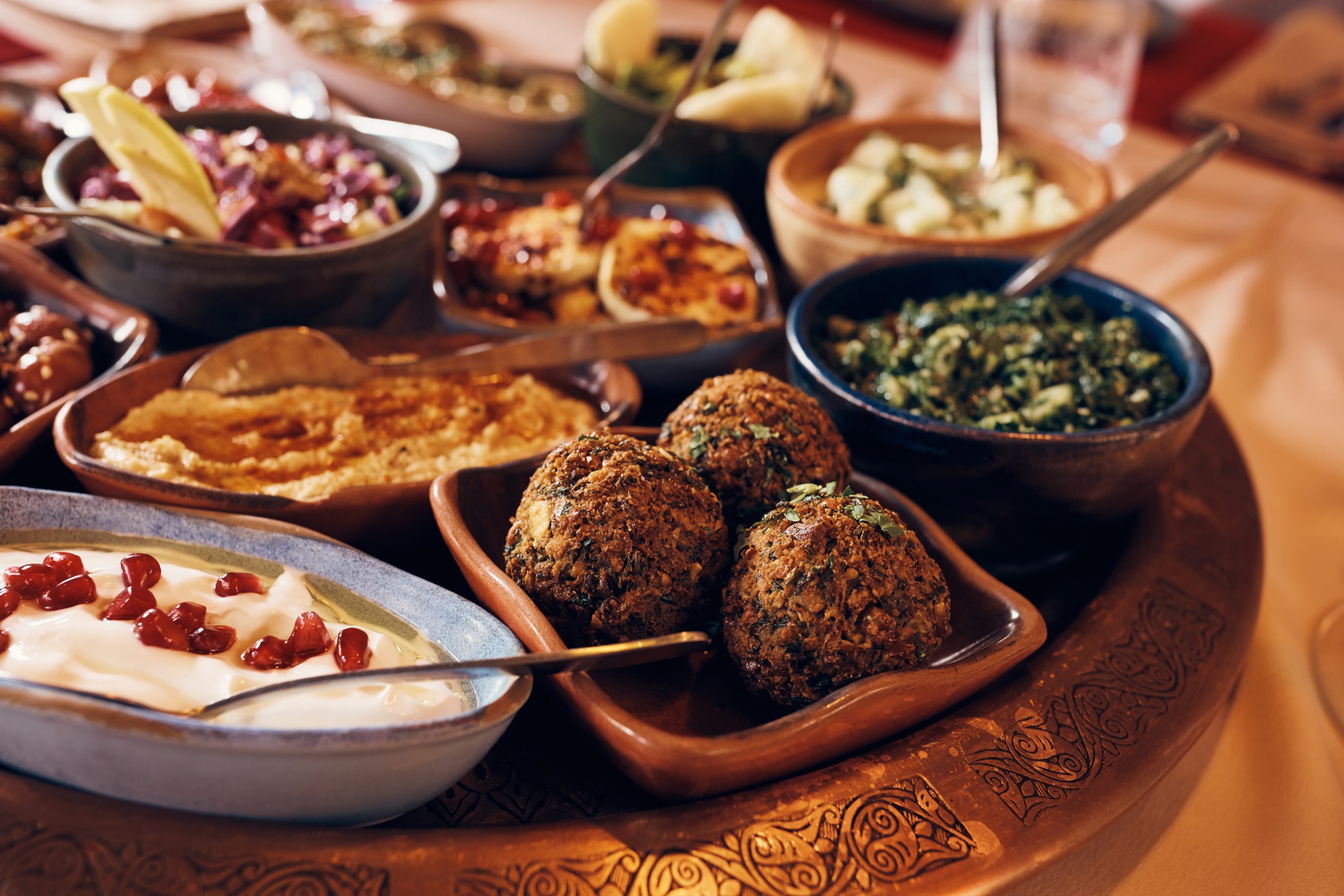
Middle Eastern catering has evolved over time, blending centuries-old recipes with contemporary culinary trends. Understanding the differences between traditional and modern catering styles helps hosts choose the right approach for their event—whether it’s a wedding, corporate gathering, or private celebration.
1. Approach to Menu
Traditional Middle Eastern Catering:
- Focuses on classic recipes passed down through generations
- Offers mezze, slow-cooked meats, rice dishes like kabsa or maqluba, and authentic desserts such as baklava and kunafa
- Emphasizes rich, aromatic spices and familiar flavor combinations
Modern Middle Eastern Catering:
- Incorporates creative twists on traditional dishes
- Fusion elements may include global flavors, contemporary plating, or lighter adaptations
- Focuses on presentation, health-conscious options, and innovative recipes
Impact: Traditional catering appeals to guests seeking authenticity, while modern catering adds novelty and visual flair.
2. Presentation and Service
Traditional:
- Family-style or buffet presentation on large platters
- Garnished with nuts, fresh herbs, and pomegranate seeds
- Communal dining encourages sharing and social interaction
Modern:
- Individual portions or plated courses for a sleek, upscale look
- Minimalist, elegant presentation with artistic plating
- Can include live cooking stations or interactive food experiences
Outcome: Traditional presentation fosters a warm, communal atmosphere, while modern presentation emphasizes sophistication and event aesthetics.
3. Dietary Flexibility
Traditional:
- Includes vegetarian, vegan, and halal options naturally, but recipes remain true to origin
- Focuses on hearty, flavorful dishes
Modern:
- Often adapts recipes for gluten-free, low-fat, or fusion diets
- Can incorporate farm-to-table ingredients and lighter cooking methods
Benefit: Modern catering allows hosts to appeal to health-conscious and diverse audiences without losing Middle Eastern identity.
4. Event Suitability
Traditional Catering Works Best For:
- Weddings, cultural celebrations, and family gatherings
- Events emphasizing heritage, community, and authenticity
Modern Catering Works Best For:
- Corporate events, product launches, and upscale private parties
- Occasions seeking visual appeal, innovation, and trend-forward dining
Impact: Choice depends on whether the goal is authenticity or contemporary experience.
5. Cost Considerations
Traditional:
- Pricing based on dish complexity, guest count, and service style
- Often more cost-effective for large-scale, communal-style events
Modern:
- May include premium ingredients, elaborate plating, or custom fusion dishes
- Slightly higher pricing for upscale presentation and innovative menu options
Outcome: Modern catering may cost more but provides a visually impressive, trend-driven experience.
Final Takeaway
Both traditional and modern Middle Eastern catering offer unique advantages. Traditional catering delivers authentic flavors, abundance, and a communal dining experience. Modern catering adds innovation, creative presentation, and dietary flexibility for sophisticated events. The right choice depends on your event type, guest expectations, and desired dining experience.