

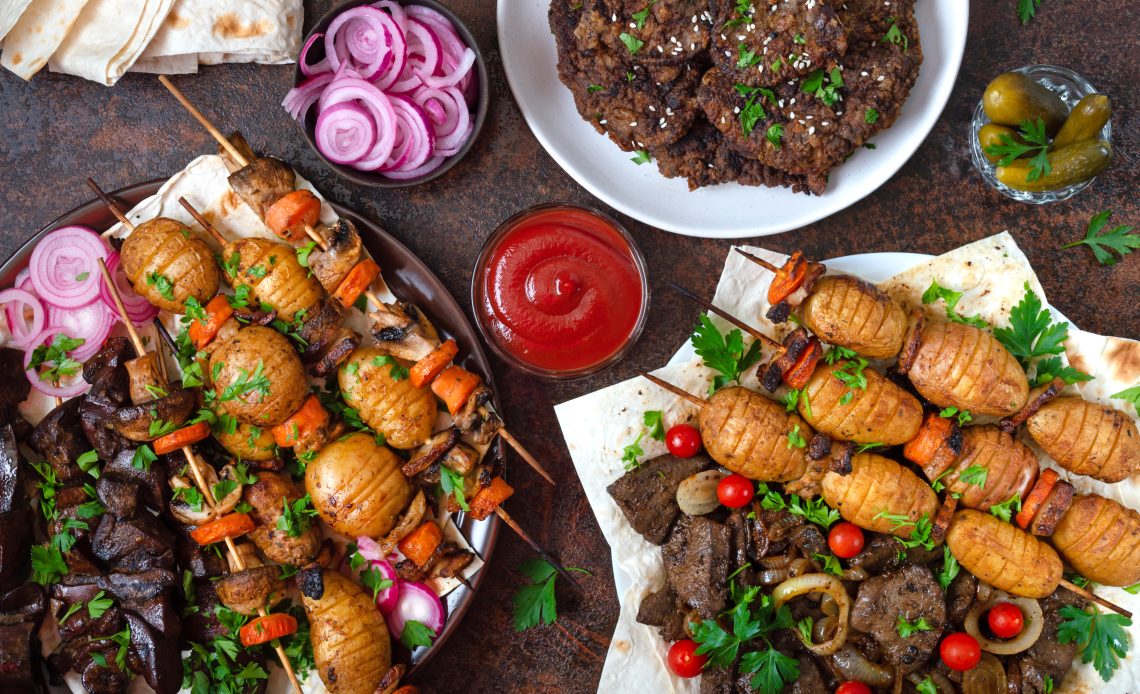
When planning an event with Arab cuisine, one of the first decisions is how the food will be served. Buffet and plated catering each have distinct advantages, and the right choice depends on your event size, style, and guest preferences. Here’s a breakdown to help you decide.
1. Buffet Arab Catering
What It Is:
Guests serve themselves from a selection of dishes arranged on platters or stations.
Pros:
- Variety and Choice: Mezze platters, grilled meats, rice dishes, and desserts allow guests to pick what they want.
- Social and Interactive: Encourages mingling, tasting multiple dishes, and casual dining.
- Scalable: Easy to accommodate large groups, from 50 to 500+ guests.
- Visual Appeal: Colorful, layered platters and interactive stations create a vibrant presentation.
Cons:
- Potential for lines and crowding if not well-organized.
- Food can cool if not served on heated trays or replenished promptly.
Best For: Weddings, corporate events, large private parties, or casual gatherings.
2. Plated Arab Catering
What It Is:
Guests are served individual, pre-plated portions of hot and cold dishes.
Pros:
- Controlled Portions: Ensures every guest receives a full serving without running out.
- Elegant Presentation: Plates can be styled meticulously for a fine-dining experience.
- Temperature Control: Hot dishes stay warm, and cold dishes remain fresh.
- Streamlined Service: Waitstaff manages timing, keeping the event smooth and formal.
Cons:
- Less variety per guest unless multiple courses are offered.
- Requires more staff and precise coordination, increasing cost.
- Less interactive; guests are seated and served rather than choosing their portions.
Best For: Formal events, gala dinners, award ceremonies, or high-end corporate events.
3. Factors to Consider
- Guest Count: Buffets work better for larger groups; plated meals are ideal for smaller, formal events.
- Event Style: Casual and social → buffet; formal and structured → plated.
- Budget & Staffing: Buffets require fewer staff but need careful replenishment; plated meals need more servers but provide controlled presentation.
- Menu Complexity: Buffet favors a wide variety of mezze, mains, and desserts; plated works well for curated courses with signature dishes.
Final Takeaway
Both buffet and plated Arab catering have their strengths:
- Buffet: Offers variety, interactivity, and scalability, perfect for weddings, large parties, and casual events.
- Plated: Provides elegance, controlled portions, and temperature consistency, ideal for formal or high-end gatherings.
Ultimately, the best choice depends on your event size, style, and guest experience goals. Some hosts even combine both—buffet for starters and plated mains—to get the best of both worlds.