

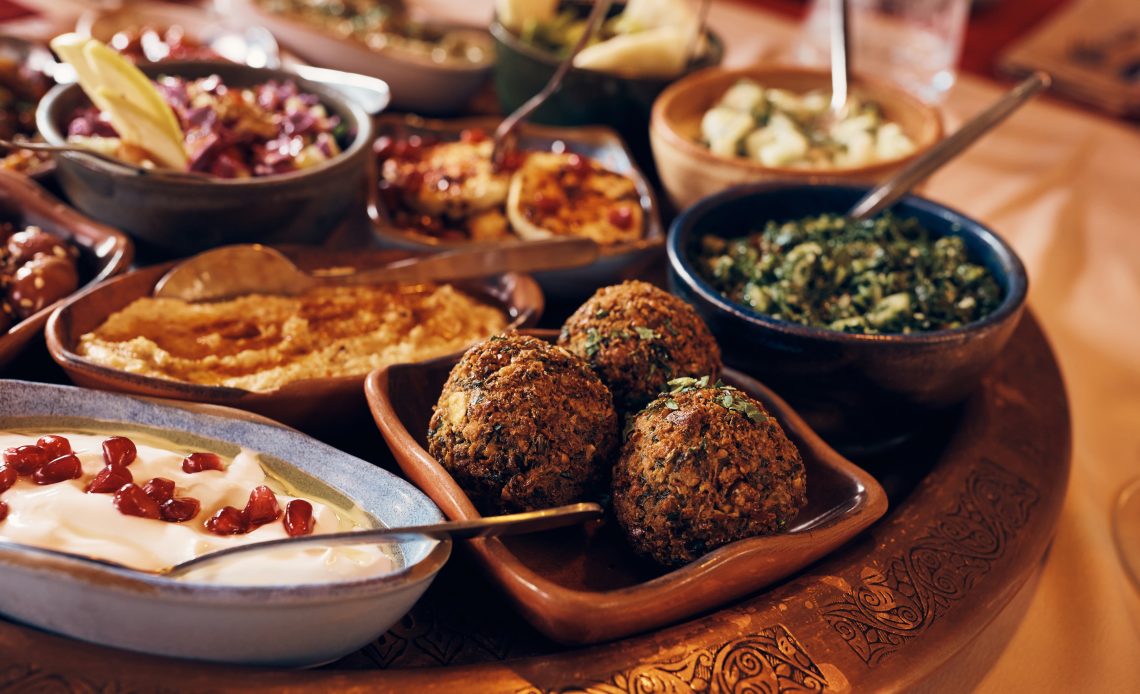
Modern events often include guests with diverse dietary needs—vegetarian, vegan, gluten-free, or omnivorous. Arab cuisine is uniquely suited to handle these mixed diets because it offers versatile, flavorful, and shareable dishes that can satisfy everyone while staying authentic. Here’s how Arab catering can meet diverse dietary requirements.
1. Build a Balanced Mezze Spread
Mezze platters can accommodate a variety of diets simultaneously:
- Vegan & Vegetarian: Hummus, baba ghanoush, tabbouleh, fattoush, muhammara
- Gluten-Free Options: Roasted vegetables, olives, pickled vegetables
- Omnivore-Friendly Additions: Stuffed grape leaves with meat, mini kebabs or kofta
Benefit: Mezze allows guests to sample and share dishes without dietary conflicts.
2. Offer Diverse Main Courses
Arab mains can be customized to include meat, plant-based, and gluten-free options:
- Vegetarian & Vegan: Stuffed vegetables, mujadara (lentils and rice), vegetable tagines
- Omnivorous: Kabsa, maqluba, grilled kebabs, shawarma
- Gluten-Free: Rice-based dishes, roasted meats, spiced vegetable stews
Impact: Guests can choose meals that align with their dietary needs while still enjoying authentic Arab flavors.
3. Include Hearty Side Dishes
Side dishes enhance flexibility and variety:
- Roasted chickpeas, lentils, and nuts for protein
- Seasonal grilled vegetables for flavor and color
- Pickled vegetables and olives for tang and texture
- Rice or grain salads for gluten-free and vegan options
Benefit: Adds richness to the buffet while supporting diverse dietary preferences.
4. Cater to Mixed Diets with Finger Foods
For casual or cocktail-style events:
- Vegan: Falafel, roasted vegetable mini manakish, spiced nuts
- Vegetarian: Cheese-filled sambousek or manakish
- Omnivore: Mini kebabs, meat-filled pastries
Tip: Label dishes clearly to avoid confusion and ensure guests feel confident about what they’re eating.
5. Dessert Options for All Guests
Arab desserts can accommodate different diets:
- Vegan: Dates, nut-based sweets, fresh fruit platters
- Vegetarian: Baklava, ma’amoul cookies
- Gluten-Free: Honey-soaked nuts, rice-based desserts
Outcome: Every guest enjoys a sweet finish without compromise.
6. Drinks for Inclusivity
Complement dishes with culturally authentic and dietary-friendly beverages:
- Arabic coffee (Qahwa) and mint tea
- Fruit juices, mocktails, or flavored water
- Clearly labeled beverage stations for convenience
Benefit: Everyone has a refreshing option that aligns with their dietary choices.
Final Takeaway
Arab cuisine is inherently versatile, making it ideal for catering mixed diets. By offering mezze platters, customizable mains, diverse sides, and thoughtful desserts, caterers can ensure all guests—from vegans to meat-lovers, vegetarians to gluten-free diners—enjoy authentic, flavorful, and inclusive meals. Thoughtful planning turns any event into a memorable dining experience that satisfies every palate.