

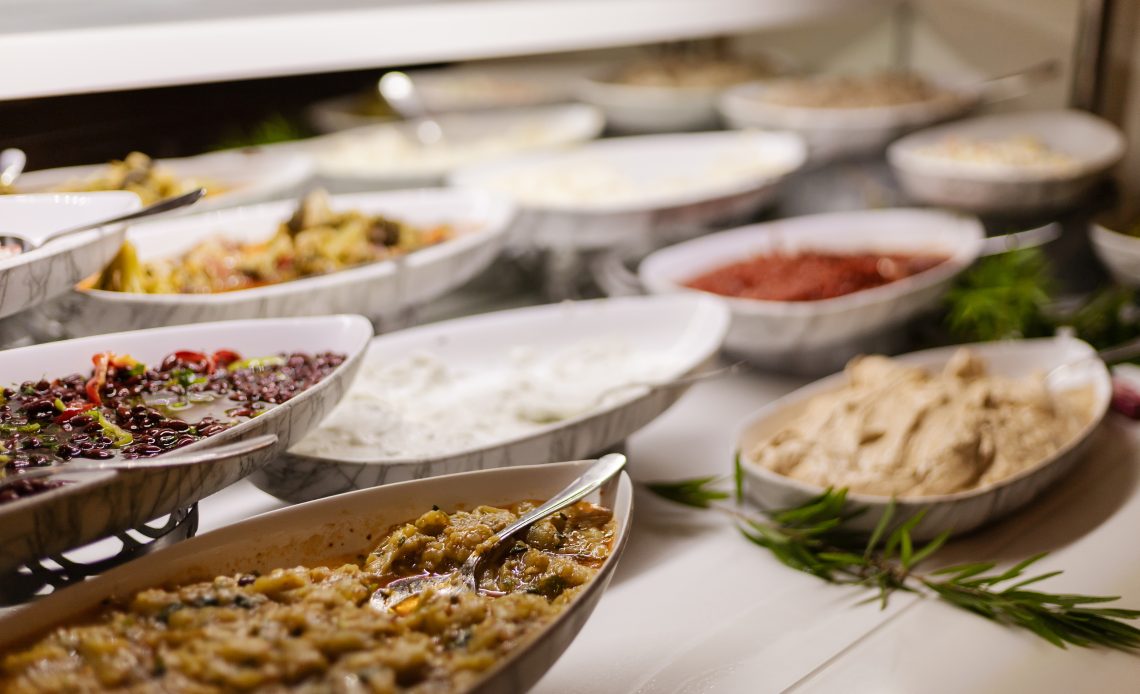
A well-designed buffet can transform any event into a memorable dining experience, and Arab cuisine is ideal for this. With its bold flavors, shareable dishes, and visually striking presentation, an Arab buffet caters to diverse tastes while keeping guests engaged. Here’s a step-by-step guide to designing the perfect Arab buffet menu.
1. Start with Mezze: Colorful and Shareable Appetizers
Mezze sets the tone for the buffet and encourages mingling:
- Hummus, Baba Ghanoush, Muhammara – creamy, flavorful dips
- Tabbouleh and Fattoush – fresh, tangy salads
- Stuffed Grape Leaves and Falafel – bite-sized favorites
Tip: Use platters and small bowls for easy self-serving and a vibrant visual display.
2. Offer a Variety of Main Courses
Your buffet should include hearty dishes that satisfy all guests:
- Meat Options: Shawarma, kebabs, kofta, roasted chicken, or lamb
- Rice and Grain Dishes: Kabsa, maqluba, or pilaf with nuts and dried fruits
- Vegetarian/Vegan Options: Stuffed vegetables, lentil stews, or grain bowls
Tip: Balance the menu to include meat and plant-based options to accommodate all dietary needs.
3. Include Finger Foods and Small Bites
For a casual or cocktail-style buffet:
- Mini shawarma wraps or sliders
- Kofta or kebab skewers
- Mezze-inspired canapés and falafel balls
Benefit: Easy to grab and keeps guests moving and mingling.
4. Sweeten the Buffet with Desserts
Arab desserts are perfect for buffet-style serving:
- Baklava: Flaky pastry with nuts and honey
- Kunafa: Shredded pastry with cream or cheese
- Ma’amoul Cookies: Date- or nut-filled delicacies
- Fresh fruits and nuts for variety and lighter options
Tip: Display desserts in tiers or on decorative trays to create a visually striking centerpiece.
5. Complement with Traditional Beverages
Beverages complete the Arab buffet experience:
- Arabic Coffee (Qahwa): Lightly spiced and aromatic
- Mint Tea: Refreshing and culturally authentic
- Seasonal fruit juices or mocktails with Middle Eastern flavors
Impact: Offers guests refreshing options while pairing naturally with the dishes.
6. Plan for Visual Appeal and Flow
A buffet’s presentation is key:
- Colorful platters with garnishes like pomegranate seeds, nuts, and fresh herbs
- Tiered or elevated serving dishes for easy access and visual variety
- Clear labeling for dietary preferences (vegan, vegetarian, halal, gluten-free)
Outcome: Guests can easily navigate the buffet while enjoying a feast for the eyes.
Final Takeaway
Designing the perfect Arab buffet menu is about balance, variety, flavor, and presentation. From mezze starters and hearty mains to finger foods, desserts, and beverages, a well-curated Arab buffet ensures every guest leaves satisfied and impressed.