

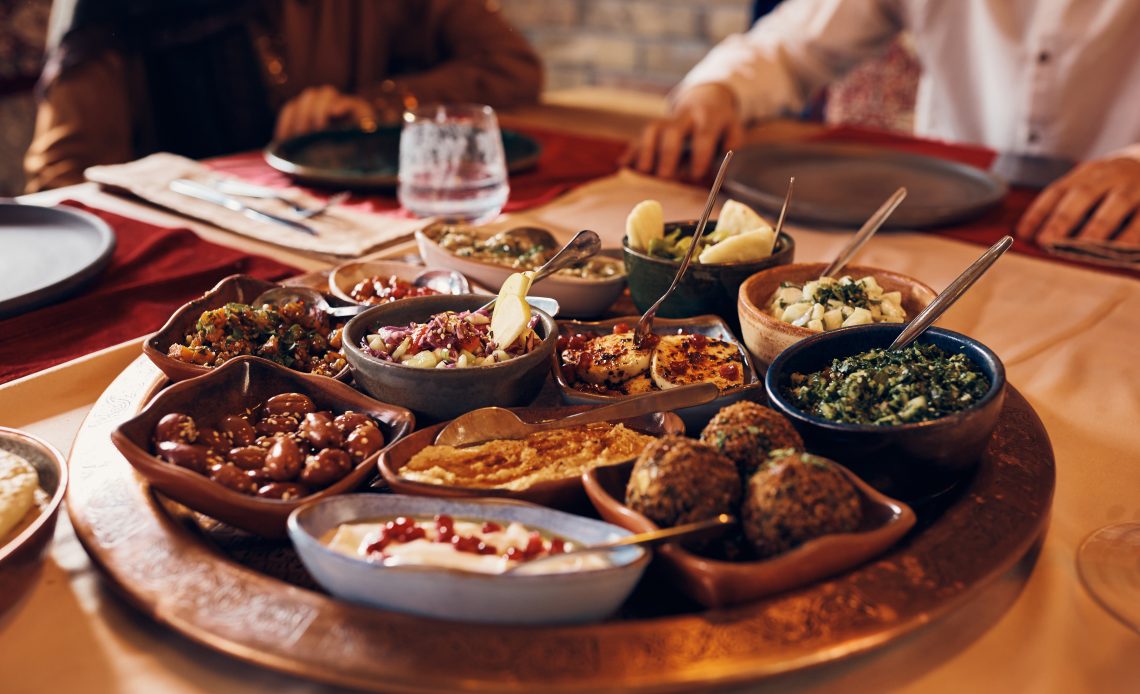
Arab cuisine is not a monolith—it’s a rich tapestry of flavors, techniques, and traditions shaped by the diverse regions of the Arab world. From the Levant to the Gulf, each area brings unique spices, ingredients, and cooking styles to the table. Understanding these regional influences is key to appreciating authentic Arab catering.
1. Levantine Cuisine (Lebanon, Syria, Jordan, Palestine)
Key Features:
- Fresh herbs like parsley, mint, and cilantro
- Lemon and olive oil for bright, tangy flavors
- Mezze-focused dining: hummus, baba ghanoush, tabbouleh, fattoush
Signature Dishes:
- Falafel, kibbeh, shawarma, stuffed grape leaves
- Desserts: baklava, ma’amoul
Influence on Catering:
- Emphasis on shareable platters and fresh, colorful ingredients
- Mezze starters are often the centerpiece of Arab buffet catering
2. Gulf Cuisine (Saudi Arabia, UAE, Oman, Kuwait, Qatar)
Key Features:
- Hearty, aromatic rice dishes with saffron, cardamom, and cloves
- Grilled or slow-cooked meats like lamb, chicken, and fish
- Use of dried fruits, nuts, and spices for richness
Signature Dishes:
- Kabsa, machboos, harees, and ghuzi
- Desserts: luqaimat (sweet dumplings), dates with nuts
Influence on Catering:
- Hot, flavorful mains dominate the buffet
- Traditional rice and meat platters are visually and gastronomically impressive
3. North African Arab Cuisine (Morocco, Tunisia, Algeria, Libya)
Key Features:
- Bold spices: cumin, coriander, paprika, saffron
- Stews and tagines slow-cooked with vegetables, meats, and dried fruits
- Couscous as a staple side dish
Signature Dishes:
- Tagine, couscous, brik, and merguez sausages
- Desserts: almond pastries, honey-soaked sweets
Influence on Catering:
- Slow-cooked stews and spiced dishes add depth to buffet offerings
- Colorful presentation with vegetables, nuts, and dried fruits enhances visual appeal
4. Egyptian Cuisine
Key Features:
- Simple, hearty dishes using beans, legumes, and vegetables
- Use of garlic, onions, and light spices
- Balanced flavors, less emphasis on heavy sauces
Signature Dishes:
- Ful medames (fava beans), koshari, molokhia
- Desserts: basbousa, konafa
Influence on Catering:
- Affordable, flavorful vegetarian options
- Bean- and lentil-based dishes add variety to large-scale events
5. Combining Regional Flavors in Catering
Authentic Arab catering often blends regional specialties:
- Levantine mezze paired with Gulf rice and meat dishes
- North African tagines alongside Egyptian vegetarian options
- Desserts from multiple regions for variety and richness
Benefit: Guests experience the diversity of Arab cuisine in one cohesive buffet or plated menu.
Final Takeaway
Regional influences define authentic Arab food, from the fresh, herb-forward Levantine dishes to the aromatic, hearty Gulf mains and the spiced, colorful North African specialties. Understanding these nuances allows caterers to craft menus that are diverse, flavorful, and visually stunning, making every event an authentic taste of the Arab world.